
Sex, Drugs, and Rock & Roll: A Vice-Signaling Psyop or a Fun-Loving Industry Standard?
Happy Bicycle Day, Fellow Seeker.
In this issue, we’re pulling back the velvet curtain to explore the glamorized trifecta that’s defined generations. Is it just clever marketing, or is there something deeper at play? Something by design. From the high of rebellion to the low hum of programming, we’re asking the unpopular questions to reveal hot fresh takes. Join us as we “turn on, tune in, drop out” and unpack the cultural spell that’s steered the western zeitgeist toward total debauchery.

Scenes from the 2000 Cameron Crowe film, “Almost Famous.”
Have you ever wondered if your party side was authentic? Or if "cool" was a costume tailored by someone else’s agenda?
As much as we love & once identified with Zooey Deschanel’s portrayal of William’s older sister, Anita, we can’t help but wonder, “Isn’t William already the coolest?” The little dude advocates for his big sister! And what about the records left under his bed sets him free? What is freedom, really? Let’s dive into the rabbit hole…
Inside this issue:
Youthful rebellion as a marketing tool;
The slippery slope where consciousness expansion meets vulnerability and exploitation;
Why pleasure isn’t the problem, but disconnection might be;
A reframe that swaps vice for vitality.
True vitality is rooted, feral, and pulsing with presence. It’s barefoot on the forest floor, breathing in the rich pinene, cultivating Qi. Not blacked out in a club or waking up with a brutal hangover. Maybe it’s time we redefine our relationship with wild. Not as a loss of control, but as a return to Nature, to instinct, to raw unbridled life force energy.
This one’s part excavation, part liberation. Maybe forward it to a friend who is feeling the call to Nature’s rhythms and could use some support in letting go of old partying ways.
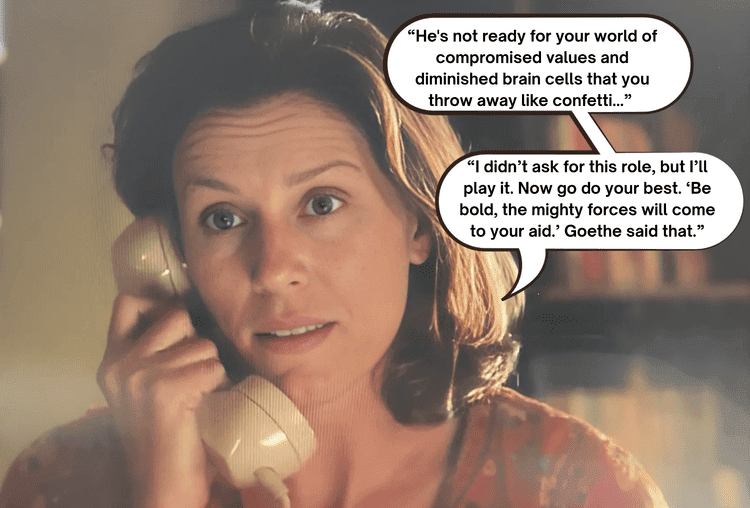
These days, we’re finding ourselves identifying more than ever with Frances McDormand’s Elaine Miller, William’s wise unwaveringly supportive Mom.
Inspiration, Move Me Brightly
Chris and I were jamming in the Black Swan (aka Ford Explorer) on our way to Wednesday night yoga, when Jerry Garcia’s guitar weeping through the speakers inspired a bittersweet reflection on talent lost too soon to addiction.
I always think about that scene near the end of Between Me and My Mind, where Trey Anastasio reflects on his enduring career. He says, "I always think about that scene in the Last Waltz where Robbie Robertson is saying, 'We've been on the road for 15 years, and it's an impossible life, so I wanna stop.'” Trey continues, “I gotta look at that a little bit like, 'Really? 15 years? That's all you can take? Come on, man!’... I'll never stop."
While we rejoice for Trey and what he’s overcome in order to cultivate a path of longevity and vitality, I also feel a quiet defense rise up for Robbie Robertson each time that scene replays in my Feedback Loop.
Because 15 years of sex, drugs, and rock & roll isn’t just 15 years of music. It’s 15 years of navigating a terrain where art, addiction, rebellion, and industry coalesced into something nearly impossible to untangle. Robbie and countless other rock stars were trying to survive a system in which partying was not only expected, but encouraged. Burnout was inevitable. Rock bottom was overlooked as the status quo devoured artists and left their remains to fade away. Trey acknowledged his rock bottom moment with accountability. He took control of his life and from what we can glean, redirected his focus toward wellness, family, friendship, and of course music.
As I dwelled in my defense of Robbie Robertson, I turned to Chris and asked, “Was the ‘sex, drugs, and rock & roll’ mantra a psyop?” That’s what inspired this inquiry: was this party-forward culture just an organic explosion of artistic rebellion? Or was it also in some deeper more curated way, a form of programming?
Let’s explore.

Scene from “Almost Famous”
The Manufactured Wild
The 1960s and '70s are often framed as a golden age of creative freedom. Artists pushed boundaries with sprawling concept albums, improvisational jazz-fusion, avant-garde film, and protest poetry that poured into the streets like wildfire. Festivals like Woodstock became symbols of liberation, while bands like Pink Floyd, The Grateful Dead, and the Who redefined what music could do, not just what it could sound like. But beneath the surface of psychedelic breakthroughs and sonic revolutions lives and breathes an age-old machinery of influence: government experimentation, cultural engineering, and subtle manipulation disguised as freedom. When all the world’s a stage, how can we discern between our genuine nature and simulated polarity?
CIA Involvement in the Music Scene
Books like Weird Scenes Inside the Canyon by David McGowan raise questions about the strange overlap between the early rock scene and military intelligence. Many prominent musicians in the Laurel Canyon scene (Jim Morrison, Frank Zappa, David Crosby) had parents involved in high-ranking military or intelligence roles. Coincidence? Maybe. We’re not here to form conclusions. Our job is simply to shed light.
MK-Ultra and Psychedelic Programming
We know now that the CIA’s MK-Ultra program tested LSD on both volunteers and unwitting subjects. What’s less often discussed is how the explosion of psychedelics in the counterculture may have been seeded or at least encouraged by the same agencies. What begins as mind expansion can, in the wrong context, become dissociation, making people easier to influence. Especially when idols are produced and exalted to god-like status before thousands of adoring fans.
In his book Operation Mind Control, Walter Bowart shines the light of awareness on how “While propaganda, disinformation, misinformation, and assassination have all played an important role in bringing the American democracy to heel, mind control holds its future. It is not surprising that under the label of national security, the cryptocracy should seek to control minds.”
Not surprising at all. Throughout this ancient game of thrones far older than our beloved CIA, students of war tactics have always suggested that weakening an adversary internally, such as through moral decay or societal disruption, can be more effective than direct confrontation. Corruption of the youth through decadence and debauchery is one of the oldest tricks in the book. Though why the CIA would weaken its own country internally is a topic for another day…
Sidebar: What does Bowart mean by cryptocracy?
Coined by Walter Bowart, the term cryptocracy refers to a hidden ruling class. Those who operate behind the scenes of governments, intelligence agencies, media, and culture. Unlike a democracy, where power is supposedly visible and ideally accountable, a cryptocracy thrives on secrecy, manipulation, and covert influence. In the context of this piece, the cryptocracy isn’t just a shadowy conspiracy. It’s the name for the invisible hands that shaped culture through curated chaos and controlled opposition.
And so the cryptocracy’s obsession with mind control led to a cultural initiation. As NPR reported in 2020, the CIA’s top chemist Sidney Gottlieb played a central role in this covert movement. According to journalist Stephen Kinzer:
"Gottlieb brought LSD to America. He was the unwitting godfather of the entire LSD counterculture."
What was an attempt at mind control ended up opening doors of perception that couldn’t be closed.
As author Martin A. Lee observed in Acid Dreams, the "CIA was an unwitting midwife to the birth of the acid generation."
Though LSD may have been weaponized in the hands war-obsessed agencies, it’s original discovery is a scientific wonder and worthy of acknowledgment. This Bicycle Day, we give thanks and remembrance to Albert Hofmann for his contribution to consciousness expansion.

Blotting paper illustrating Hofmann’s experience riding his bike on LSD.
A Pure Intention: Hofmann and the Sacred Spark
Long before LSD became a tool of programming or pop culture rebellion, it was discovered with loving intent. Swiss chemist Albert Hofmann first synthesized LSD in 1938, and famously experienced its effects on his legendary "Bicycle Day,” April 19, 1943. Hofmann believed the substance could serve as a bridge. One that reconnected humans with nature, the divine, and the deep mysteries of existence.
He referred to LSD as "medicine for the soul," lamenting the way it was later distorted by misuse and manipulation. For Hofmann, LSD was never meant for chaos or control. It was a doorway to reverence, healing, and expanded consciousness. His vision reminds us that even within the co-opted, there exists the original pristine essence.
And the pure relationships rooted in shared healing remain, as the wisdom of the heart discerns trustworthy leaders. As for us? Well, any friend of Ram Dass is a friend of ours. We always have room in our Feedback Loops for a Tim Leary story.

Consciousness expansion was always central to Tim Leary’s heart.
And we thank him and Ram Dass for becoming the elders that they didn’t have. While psychedelic exploration may have been new to Western culture at the time, such medicines have ancient roots. Though without traditional shamans guiding them, Baby Boomers were left to fend for themselves in this new landscape of free love and infinite possibilities.
The Hijacking of the Rebellious Spirit
"Sex sells" became a mantra during the Mad Men era, but it wasn't just a marketing tool first deployed when Pearl Tobacco featured a naked woman on its packaging in 1871. It became a cultural cornerstone of our patriarchal society.
A signifier of liberty and popularity. Rebellion, too, was commercialized. The music industry carefully curated an image of the wild rock star: overflowing ashtrays, beer bottles, groupies, promiscuity, seduction, white-dusted mirrors, trashed hotel rooms. But often, what the magazines glorified as a symbol of freedom was a produced image. What looked like liberation was, at times, a different kind of trapdoor. Curated chaos.
As Timothy Leary noted in Neuropolitique:
“Just as every Hollywood picture is 'put together' by producers, who are always in tight control of the enterprise and reap the lion's share of the profits, so is the Outlaw Industry managed by lawyers.”
A polished, packaged, and sold “Industry of Cool,” as media empires exploited and manipulated vulnerable artists and rebels understandably seeking an eject button from a harsh industrial paradigm.
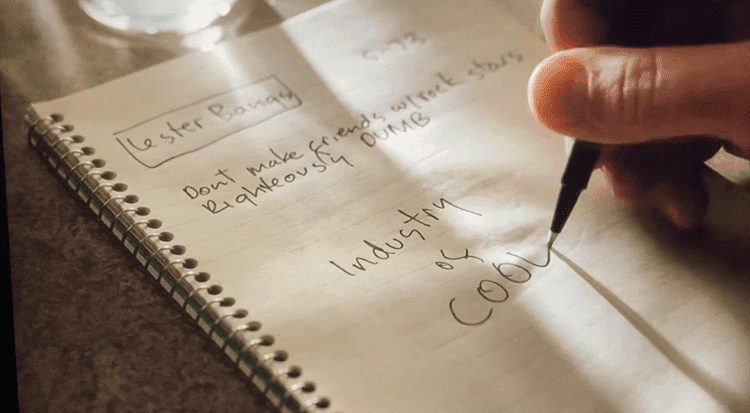
Scene from William’s meeting with Lester Bangs in “Almost Famous”
When the Party Becomes the Trap
There’s nothing inherently wrong with sex, or drugs, or rock & roll. In their purest forms, these are expressions of life-force energy, altered states of consciousness, and creative fire. We’re big fans of all of the above. But when they become packaged and prescribed as the only form of social acceptance, as the only way to belong, to be seen as cool, desirable, or even free - they lose their essence. They become costumes instead of conduits. Identity becomes performance, and the self fractures under the weight of expectation.
To run wild doesn’t require escapism, distraction, or disassociation. Rather it calls on us to feel truly alive. It’s connection, not codependence. Its roots in the Earth, not just smoke in the air.
True vitality is cultivated through healthy organs, clear blood, balanced hormones, strong digestion, deep rest. It’s not just a vibe; it’s biochemical. The rock stars of the ’60s and ’70s burned hot, but many of them dimmed early. Their life force gradually dispersed, ashes to ashes, dust to dust, as they sacrificed their body temples for the image they were expected to uphold.
And maybe that’s what Trey figured out through his sobriety journey. How to strip it back. How to return to the essence. How to breathe life into the Now. He broke free from the illusion of the party that had been promised to rockstars for generations. Trey’s creative flow will not burn out, nor will it fade away.

Reclaiming the Real Wild
So what if we’ve been sold a version of wild that leads us further from ourselves? A version that is synonymous with reckless behavior.
What if real vitality isn’t found in the excess, but in the balance where nature, rhythm, and presence meet?
It might be time to redefine wildness.
Not as a spiral into chaos, but as a spiral back to center.
Back to the Earth. Back to the body. Back to the pulse that doesn’t need to be hyped or numbed. Only felt.
And that’s where this path leads: not away from rock & roll, but deeper into its soul. Into the lyrics that inspire us to imagine peace, love, and harmony.
Not away from pleasure, but toward reverence. Not away from rebellion, but toward remembrance.
The True Rebel: Remembering Elaine Miller
Something we noticed in our rewatch of “Almost Famous:” Elaine Miller is the true rebel. She remained rooted in Universal Wisdom, unshakable even in the presence of fame. Though it made her a loner, her resistance to the spell cast by “sex, drugs and rock & roll” made her the stoic Jedi of the film. She showed us how not to become flying monkeys, contributing to idol worship of celebrities who struggle under the immense pressure to maintain their positions atop the pedestals of false gods.
This bicycle day, please enjoy the altered states of consciousness made available with gratitude for those who have come before. Tim Leary, Ram Dass, Albert Hofmann. The elders for our generation. Our shamanic guides. And gratitude for the more recent shift toward moderation. With Trey’s timeline hop, our favorite rockstars are offered a new archetype. One that places vitality on the altar. And perhaps reframes what it means to be “cool.”
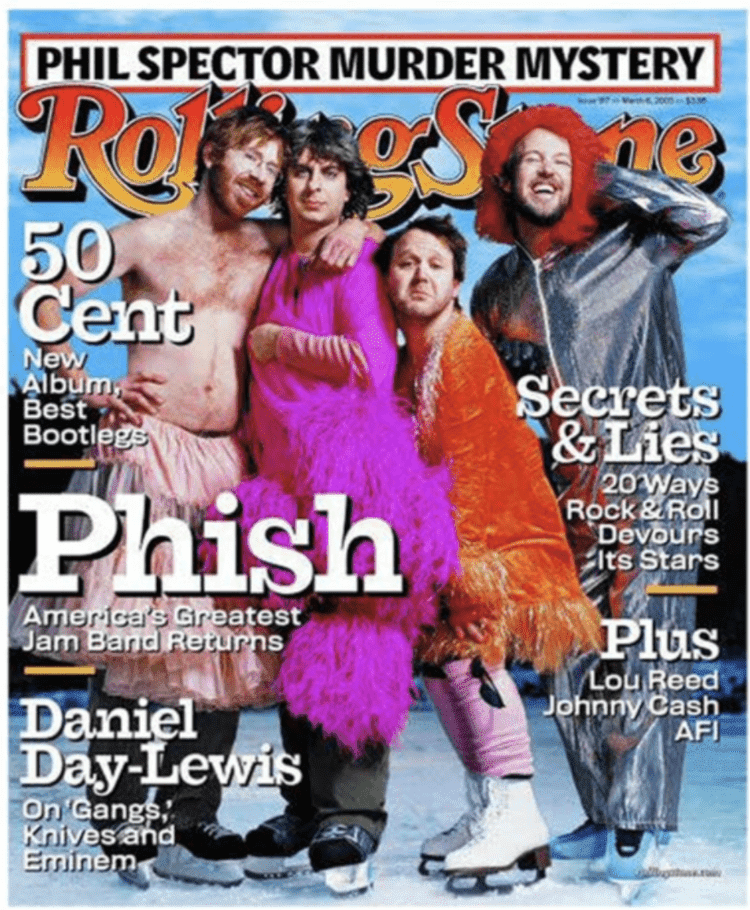
This Rolling Stone cover was the ultimate rebellion.
And please remember to integrate! With respect to our teachers and guides over the years, we created this list a couple years ago and feel today is an auspicious time to share this loving reminder:


Remember, YOU are the Eyes of the World.
It can be so easy to place admiration outside of ourselves. To view celebrities as worthy of worship. Though, they are people too. Human and fallible. And unless we know them personally, we have no idea how aligned or embodied they are in their values. So this Bicycle Day, may your consciousness reveal to you the root of that admiration. How does it connect with your own core values?
As we like to remind our clients, whatever it is you admire in another exists within you. Or else you wouldn’t have the bandwidth to perceive those traits and characteristics in the external world.
So if for example, you admire Trey’s talent, such talent also lives within you. Maybe you’re ready to devote some time and space toward cultivating your own gifts. Set your expression free. Redirecting idol worship toward self-love, sovereignty, and autonomy is the ultimate rebellion.